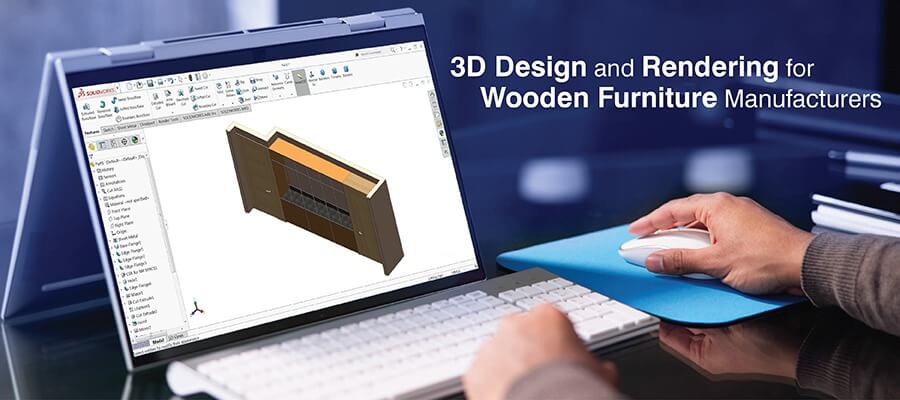
3D design services help wooden furniture makers with accurate modeling, photorealistic renders and manufacturing integration. The results by professionals are more consistent, less prone to mistakes, use fewer materials and simplify communication with clients. When you integrate AI with it you can do much more.
Table of Contents
Advanced digital technologies have transformed the wooden furniture industry. And out of all the innovations, 3D design services have been most crucial, totally changing how furniture is actually taken from an idea all the way to marketable product.
To have a competitive edge in 3D furniture design for manufacturers you must use CAD and 3D rendering tech. This helps you achieve faster production, reduces errors and helps you improve customer engagement.
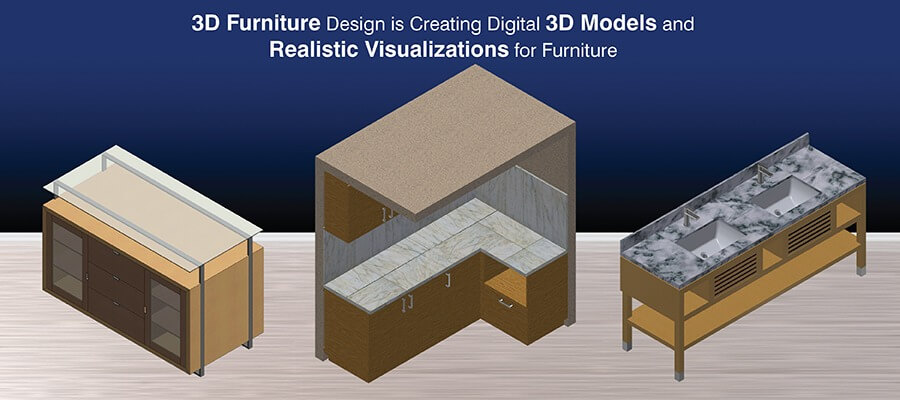
3D furniture design services cover the whole range of creating digital 3D models of furniture. The process involves building the design from scratch using the dimensions, the underlying structure, the joints and all other aesthetic details.
3D furniture rendering is another important part of this process. It turns these digital woodwork CAD drafting into realistic pictures or animations. This is done by digitally putting in light, textures and the kind of finish it has to make it look as accurate as possible.
They also incorporate wood grain textures in 3D models to get the look and feel of a real piece of wood right. This takes into account all the variations in color and how the grain runs giving you a pretty authentic look.
3D design plays a vital role in bringing wooden furniture to life. 3D design services are very useful in a lot of areas of the production process:
The furniture industry relies on quite a few different software solutions when it comes to 3D design and rendering:
| Software Category | Popular Options | Primary Applications |
|---|---|---|
| General CAD software | AutoCAD, SolidWorks | Technical design, engineering specifications, manufacturing documents |
| Furniture-specific CAD | CabinetVision | Specialized furniture design with built-in libraries and industry standards |
| Furniture 3D modeling | Blender, SketchUp | Form development, artistic exploration, complex geometry |
| Rendering software | V-Ray, Corona Renderer, Lumion | Photorealistic visualization, material definition, lighting simulation |
| Integrated suites | 2020 Design, PYTHA 3D CAD | End-to-end solutions combining design, rendering, and manufacturing outputs |
Wood furniture manufacturers that use 3D CAD to rendering for furniture workflows really reap the benefits of seamless transitions from technical modeling to visual presentation.
Partnering up with specialized furniture rendering services gives their inhouse team advanced visualization expertise for client presentations and marketing initiatives.
Although implementing 3D furniture design for manufacturers has its benefits, it comes with a few challenges as well:

Implementing 3D design services unlocks a whole host of advantages that really pay off for manufacturers in the wooden furniture business.
3D modeling for wooden furniture lets designers tweak dimensions, proportions and details super quickly to refine their ideas. This is particularly valuable as they need to be able to respond to client feedback without compromising on the design they want.
When changes are made in CAD, the digital model will automatically update all related elements. That precision also translates to manufacturing.
Client communication becomes a whole lot clearer when 3D product visualization for furniture show them exactly what the finished product will look like. And when you combine that with the photorealism in 3D rendering, clients know exactly what they’re getting.
New 3D design systems use nesting and cutting optimization algorithms to cut waste. By arranging components optimally these systems can:
When you cut material waste by 15-25% you are saving money and also reducing carbon footprint.
3D design services create a direct link to the manufacturing process. You get the following:
All of that reduces errors, delays and the need for manual data entry.
Reduce production errors with precision CAD modeling for furniture.
Get started today »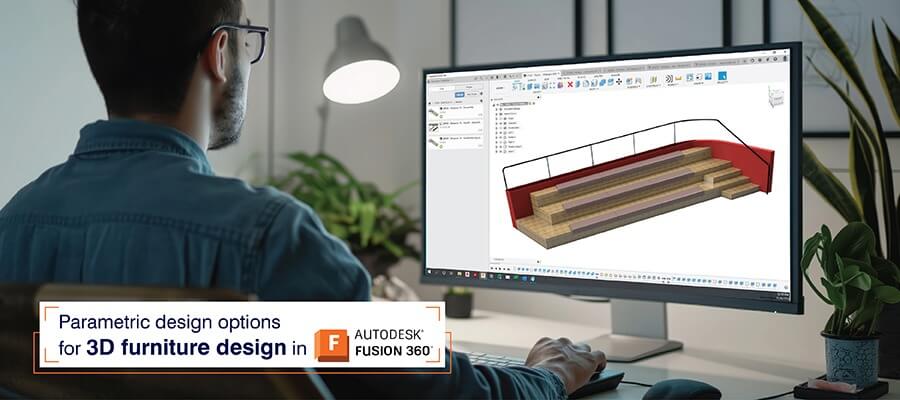
There are several techniques that make a difference when designing wooden furniture digitally:
Rather than creating a static model, parametric design allows you to think of your design as a set of rules and variables that define how the different parts relate to each other. This is beneficial for several reasons:
360 degree furniture visualization from these parametric models lets clients get a feel for how the finished product will look. They can spin it around, take a close look at all the details and get a sense of what they’re getting.
When you are creating wood furniture design in 3D, you need to get the materials right, especially the wood grain and finish. You need to keep in mind the following for this:
All of this is done combining different layers of procedural textures, reference images and physically based rendering.
Modern 3D design services offer high quality 3D rendering pipeline for manufacturers that are crucial for validating wooden furniture designs:
These virtual prototyping capabilities let manufacturers catch and fix structural and functional issues before they even start building.
Accelerated cabinet CAD drafting for residential furniture manufacturer
A US residential furniture manufacturer struggles with a serious backlog, limited resources for detailed cabinet CAD drafting a real need for precise manufacturing drawings for kitchen cabinets based on their architects’ PDFs to stay on schedule and meet quality standards.
Hitech CADD Services brought together a team of skilled drafters in AutoCAD who took the architect’s PDFs and turned them into detailed shop drawings including all the cabinet details, parts, hardware, joinery.
The end result was:
 Cabinet Drafting
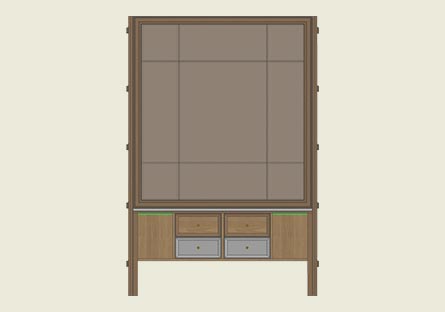 Library Unit CAD Model
Choosing a 3D design partner requires you to carefully consider the following factors:
Some of the key innovations in AI and automation technologies in CAD for wooden furniture are:
Wooden furniture manufacturers today can’t operate without 3D design services. It lets them leverage the digital marketplace by blending digital design skills with traditional woodworking knowledge. The end result is a proper boost to creativity, efficiency and product quality.
For manufacturers who use these services, it’s about bringing design ideas to life. They see the value in using these services as a whole platform that connects design with manufacturing reality. This is how you end up with furniture that looks the part and also meets the customer’s needs.
There are several like AutoCAD, SolidWorks Fusion 360, although the one that is best depends on what you need to get done, how complex the project is and your budget.
CAD makes it easy to modify and make changes and it helps everyone involved collaborate easily. It also helps cut down on mistakes, make the most of our materials and get prototypes made faster.
Costs can vary depending on how complex your project is, the designer’s experience with CAD and where they are based. But it might be an hourly rate or a one-off fee for the whole project.
CAD helps us be more efficient with our materials by giving us precise measurements, helping us plan out the cutting process and even evaluating how things will come together.
Transform your wooden furniture concepts into 3D models.
Get in touch with us »
Kashyap Vyas is an Engineer at Hitech and holds a Master’s degree in Thermal Engineering with several research papers to his credit. He covers CAD and CAE topics for the engineering industry. His contributions are primarily focused on encouraging manufacturers and suppliers to adopt virtual product development tools to build efficient products with reduced time-to-market.
You may also like
Point Cloud to Revit: The Backbone of Scan to BIM Projects
 Mar 17th, 2026
The Role of Millwork Detailing in Modern Architecture
Feb 11th, 2026