Outsourcing CAD drafting services for manufacturers of sheet metal and millwork products has become necessary to ensure that manufactured items meet design specifications. The increased productivity and access to specialized software and cost savings provide a sound alternative to hiring additional personnel.
The benefits of outsourcing CAD drafting services to sheet metal fabricators and millwork manufacturers are many. One of the major benefits is providing the ability to scale businesses to accommodate both peak and slow periods of production. Any CAD drafting outsourcing helps you avoid incurring the expenses and logistics of hiring a permanent workforce.
In sheet metal fabrication where time is money and details are critical, the ability to outsource CAD drafting is essential to your success. This will allow you to optimize your resources, remain asset light and provide an efficient delivery process.
Challenges of finding right CAD outsourcing partner
It can be difficult to find a reliable CAD drafting company for sheet metal fabrication that offers a variety of drafting services to support your company’s needs. There are many factors to consider when searching for the right CAD drafting company to outsource your CAD drafting project:
- Quality Control: You need to be sure that the quality of the work provided by your CAD drafting company meets your company’s quality expectations.
- Post contract processes: Both you and the service provider need to understand and agree upon what happens after the contract has been executed.
- Expertise and experience: The CAD drafting company you select should have the ability to draft using the software systems your company uses. Also, the company must have a track record of providing CAD drafting solutions for manufacturers across architectural woodworking and millwork CAD drafting projects.
- Cost vs. deliverables: Besides researching CAD drafting companies and their capabilities, you need to learn the pricing model of each CAD drafting company and weigh it against the value they provide.
- Communication and collaboration: It is essential to establish effective communication and collaboration with your CAD drafting company. Poor communication or poor collaboration may result in poor quality drawings and missed deadlines.
- Hidden costs: Selecting a CAD drafting company that is not capable of completing a CAD drafting project may incur additional costs associated with managing risks and coordinating efforts.
- Cultural differences and professionalism: Your CAD drafting company should understand and appreciate cultural differences and demonstrate a level of professionalism and integrity that supports your company’s values and standards of work.
- Data security: If you are planning to outsource your CAD drafting project, it is essential to protect your company’s data.
In order to avoid the challenges listed above, it is suggested that you thoroughly research and investigate potential CAD drafting companies that provide precise mechanical CAD design services, prior to making a selection. The research process should include an evaluation of a company’s expertise, past performance and client testimonials.
Once you have selected a CAD drafting company, you should establish a solid business relationship and negotiate a contract that provides favorable pricing and conditions.
Below is a checklist that will assist you in identifying the best CAD drafting company to partner with to support your sheet metal fabrication or architectural millwork CAD drafting needs.
When creating an assessment checklist, you are creating a map or guide to follow. This will lead you through all of the potential issues and options for selecting the best CAD drafting company to partner with, to meet your project’s needs.
An assessment checklist allows you to create a structured method of evaluating your various options and ensure that you do not miss any of the essential considerations which may impact your project.
Experience and area of expertise
Why It Matters: An experienced service provider will have a greater understanding of how to accomplish your CAD drafting requirements. The vendor’s experience in CAD drafting, CAD drawings and CAD conversion services will enable them to quickly understand your industry and its challenges and develop an efficient workflow.
What to ask:
- Years of experience in CAD and sheet metal drafting: When evaluating a CAD service provider’s length of time in business, you will often get a sense of their level of experience and reliability. Companies that have been in business for many years have had a chance to perfect their processes for addressing the unique challenges each industry presents and will generally have a smoother and more efficient project workflow and produce higher quality deliverables.
- Request a list of completed case studies: Case studies provide a real world example of a vendor’s capability in CAD drafting for sheet metal and millwork projects. They will give insight to the types of projects that a vendor has successfully completed, the challenges they were able to overcome successfully and the creative solutions they were able to implement.
CAD software version and quality
Why It Matters: The CAD software version a service provider utilizes will influence a project’s overall success. Older software versions may have compatibility issues when used with newer computer systems. Also, older software versions may have missing features which are critical for improving the production efficiency of technical drawings and the overall quality of the product.
What to ask:
- Software used by CAD vendors: Knowing what CAD software version is being used will provide insight into how they perform (e.g., AutoCAD, Autodesk Inventor, SolidWorks, Creo). The likelihood of producing work that is in line with current industry standards increases when a vendor uses the most recent software versions.
- Case studies for each software application: When requesting case study information about CAD vendors and asking them to provide examples based upon projects they have done in each application such as AutoCAD drafting, Autodesk Inventor, SolidWorks, Creo, it demonstrates the knowledge the CAD vendor has of those applications which aids in making a better educated decision.
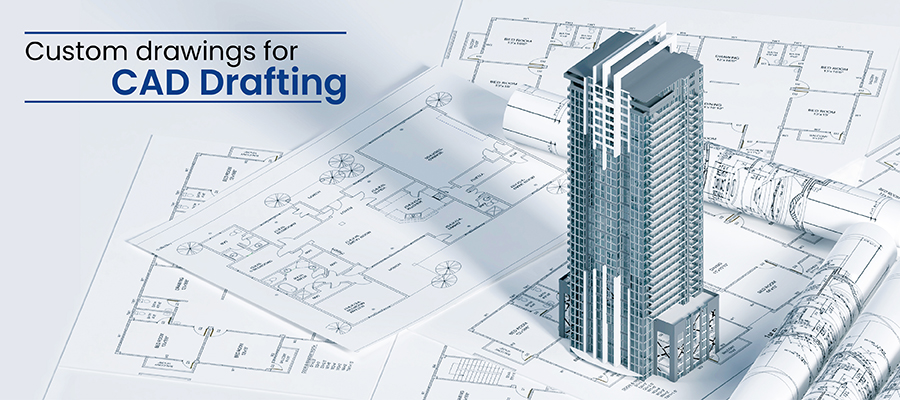
Support for custom drawings
Why It Matters: When working on sheet metal fabrication or millwork drafting projects, there are many times when a customer has unique specifications, detailed designs, or specific requirements that standard solutions cannot satisfy. Thus, when looking for professional CAD drafters, it is very important to find one that can provide CAD drafting services tailored to the specific needs of your project.
The need to create a custom sheet metal drawing may arise from a number of different aspects of your project such as a specific bend radius in a sheet metal part or a unique joinery method for millwork. Creating a custom drawing helps ensure that your end-product will meet your specifications.
What to ask:
- Feasibility of customization: Is the CAD drafting service company able to customize drawings based on your specific drawing requirements? If so, what formats (i.e., DXF, PDF) can they produce custom drawings? You should also make sure that the custom CAD files produced are compatible with your current management system such as Autodesk Vault.
- Knowledge of specific tools and equipment: Does the CAD drafting engineer have knowledge of the specific tools and equipment you use in your manufacturing or fabrication processes? If so, this should ensure that the CAD file preparation for your custom drawing will be compatible with your current systems. Being able to save and manage your custom files in Autodesk Vault can provide improved version control and increased data integrity.
- Compatibility with machinery or equipment: Can the CAD draftsman create drawings that are compatible with your current machinery or equipment? Compatibility issues between the drawings (in formats such as DXF) and your current equipment can result in costly delays and operational inefficiencies. If the CAD drafting service company can integrate your custom drawings into Autodesk Vault, this provides an additional layer of security by providing a record of all changes made to the drawings and maintaining an audit trail to increase accountability.
Flexibility and scalability
Why It Matters: A flexible remote CAD team able to meet the changing needs of the business would be an incredible asset to any business. CAD drafting outsourcing for manufacturers has become crucial to build businesses. Contracted fabricators of sheet metal and manufacturers of architectural millwork experience high variability in the demand for specialty CAD resources.
A vendor who is able to respond to these variable demands without sacrifice to quality is an incredibly valuable asset to businesses.
What to ask:
- Vendor flexibility for changing project demands: How does your organization handle unexpected changes in project demands? You should be able to adjust to new project scopes or requirements quickly, without delay or additional expense. Changes to project scope or requirements can occur at any time whether it is during a seasonal peak or if your business requires a rapid adjustment to complete contracted work.
- Change management process in the agreement: Defining a change management process helps to avoid disputes and misunderstandings between vendors and clients. Changes in CAD project management can also occur mid project which makes defining a change management process even more critical for establishing a clear framework for modifications to project deliverables and timelines.
- Scalability options for niche resources: Whether you need to add personnel to a larger project or reduce personnel during slow periods, having the ability to scale your CAD drafting services is a key component of effective resource planning.
- Rapid ramp-up and ramp-down capability: The ability to ramp up or ramp down CAD drafting services, depending upon the project demands, is critical to responding to the variable project demands of many fabricators and manufacturers of architectural millwork.
Proficiency in CAD technology
Why It Matters: Proficiency with CAD technology requires a knowledge of using commercial software such as AutoCAD and SolidWorks and special tools like SWOOD, Woodwork for Inventor, custom CAD macros and plugins so that the contractor can meet varied industry standards to achieve success on the project in industries such as building products, sheet metal and millwork.
What to ask:
- Industry practices for CAD drawing standards: If vendors follow CAD drafting standards, they will be able to provide a consistent and reliable level of quality and will be able to work seamlessly with all other systems. SWOOD for woodworking or Woodwork for Inventor each tool typically has its own standards and guidelines. By understanding which standards and guidelines a company utilizes, you will have an idea of the degree of expertise and reliability a company has and whether they will be compatible with your current workflow.
- CAD conversion experience: The ability to take non editable formats (i.e. PDFs, Images) and convert them to editable CAD format is a unique skill and can greatly benefit some projects. Many times, older designs that need to be updated, modified or reused for another project require this service. Utilizing specialized plugins or CAD macros can speed up the conversion process and improve accuracy. In many cases, a company with strong PDF to CAD conversion capabilities can be a huge asset to your design team in terms of maintaining the integrity of your design data.
- Standard parts conversion: Converting standard parts to sheet metal components while meeting industry standards such as TEMA, ANSI, or BS is a detailed task. As a result, this requires a great deal of nuance in order to ensure that your parts will fit into the larger system. Companies with specialized tools and software will be able to assist you in converting your parts more quickly and accurately. For example, a company that uses specialized tools such as SWOOD or Woodwork for Inventor will be better equipped to handle these CAD conversions.
- Guaranteed accuracy: What percent accuracy does the vendor guarantee at each stage of 3D CAD drafting, CAD conversion, detailing of drawings, Bill of Materials (BOM) preparation and automation? Accuracy required varies by the type of product. Storage of non pressurized vessels needs high accuracy for safety reasons while custom millwork in commercial kitchen applications may only need medium accuracy.
3D modeling and documentation
Why It Matters: 3D CAD modeling improves project understanding from multiple dimensions, helping you plan, visualize and execute your project much better. 3D CAD models show how each individual component will interact with other components in real world conditions. Bill of Materials (BOM) listing parts, a list of parts, a DXF file, a NC file etc. used as the foundation of project execution, are crucial if you need to modify or maintain your project in the future.
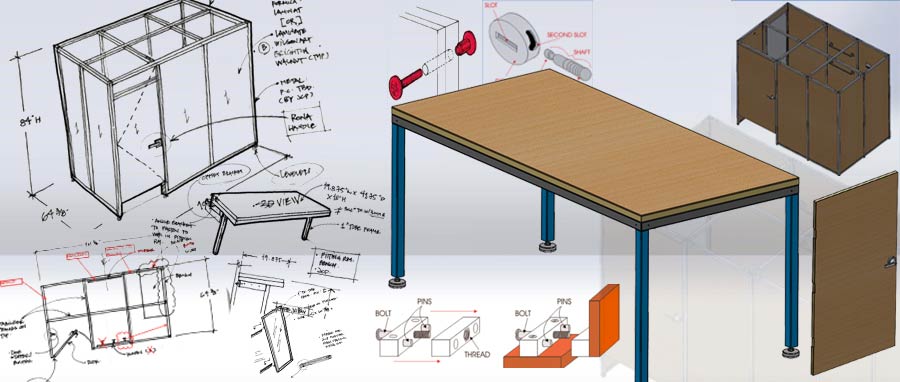
Concept to Detail Design
What to ask:
- Ability to create 3D sheet metal model & assemblies: 3D models allow users to see their finished product in a dynamic manner and catch problems and make data driven changes before the product goes into production. This benefit is particularly important to the sheet metal fabrication industry because the complexity and cost associated with errors are high.
- End-to-end documentation support: Complete documentation such as Bill of Materials (BOMs) and part lists, DXF files and NC files. Is crucial for your project.
- BOMs and part lists: BOMs and part lists provide an understanding of what parts are required for the project. These will help with procurement and inventory control.
- DXF files: DXF files are used for 2D CAD drafting and 3D drawing. DXF files allow for the communication and interoperability of information between various CAD systems.
- NC files: NC files contain the instructions that machine tools need to follow to produce the product. The translation of the design into an actual product depends upon the accuracy of the NC files. Accurate CAD drawings and models can be used by the designer to generate the NC files, and the manufacturer can use them as inputs to the CNC machines.
Comprehensive documentation ensures that all team members, from designers to fabricators to project managers. It also provides a roadmap for the project, outlining each step needed for successful execution.
Data security and confidentiality
Why It Matters: Outsourcing CAD drafting requires that you protect your information in a secure manner since data breaches occur regularly and cause significant costs. A study conducted by Ponemon Institute and published by IBM stated that expense of a data breach has increased to $4.45 Million, or 15%, from its former amount of $3.86 Million. Therefore, you should only consider vendors that can assure the privacy and security of your Design Data.
What to ask:
- Security and data confidentiality of design files: Will your vendor protect your design files in a manner that is both secure and confidential? While this may appear to be simply a matter of complying with regulations, it means signing NDA agreements and encrypted secure file transfer protocols for protecting your company’s intellectual property and other sensitive information. In many industries such as sheet metal fabrication and millwork there are high levels of proprietary nature to the designs which can result in very high levels of risk if those designs fall into the wrong hands.
- Data protection measures & processes: Knowing how the vendor protects data can provide comfort and may also be required by regulatory bodies to comply with industry specific or international regulations. These may include encryption, secure data transfer and ongoing security audits.
Competitive pricing
Why It Matters: Although the quality of your job should always take priority, you cannot avoid the cost of creating a sheet metal CAD drawing. However, competitive pricing will make a job financially viable and may show that a vendor is efficient with their resources. Understanding how to compare prices in the current market which has many CAD outsourcing options, is critical to making an educated decision.
What to ask:
- Multiple quotes to get a market perspective: Always obtain multiple quotes from different vendors and compare them to determine which one gives you the best price. When obtaining quotes, you’ll be able to determine how competitive your vendors are with regard to pricing and cost efficiency as well as have a better understanding of what price range you can expect to pay.
- Review all expenses included in quote: Give yourself plenty of time to review every expense listed in your quote. There are several items included in a quote such as initial costs, as well as any potential hidden costs or fees associated with the project. To properly budget for your project, you need to know exactly how much money you’ll be committing.
- Quality over cost: Lower prices can sometimes result in cheaper materials and less experienced labor. As such, you need to find a balance between the cost of the project and the level of quality and the timeframe for completion. Some vendors provide their services using a variety of pricing models, i.e., hourly rate, monthly retainer, project based pricing, etc. By knowing what pricing models are available, you can choose a pricing model that fits the size and scope of your project.
Automation and integration capabilities
Why It Matters: Automating the time-consuming and redundant processes will allow for a greater degree of accuracy, increase the speed of turnaround times (TAT) as well as reduce the chance of human error.
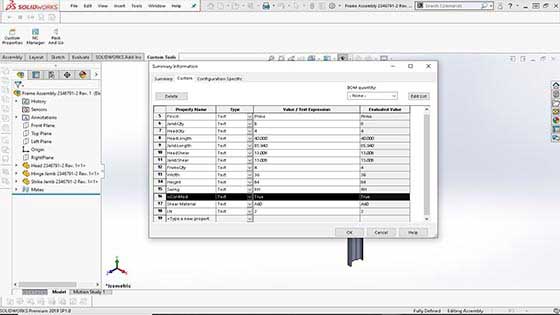
Automated Door Design Customization
What to Ask:
- Degree of automation of CAD activities: CAD automation increases speed in performing repetitive functions, such as converting standard parts into CAD models, creating Bill of Material (BOM) lists, and running complex simulation studies. This results in in faster TAT, lower costs and the ability to complete projects within tighter deadlines.
- Capabilities of automation tools: Understanding the capabilities of the automation tools used by the vendor such as DriveWorks automation, CAD Macros, SolidWorks macros etc. is crucial to determine the potential time savings as per the project needs. For example, DriveWorks automation can automate customized designs, while CAD macros can automate most routine CAD functions.
Domain expertise
Why It Matters: A vendor who has specialized knowledge in the required domain will understand the unique characteristics of working in your type of industry, which will allow them to create innovative and practical solutions for your needs.
What to ask:
- Breadth of design knowledge: Understanding the vendor’s breadth of expertise in the area and their ability to take on “specialty” projects is crucial. The vendor that has broadened their scope of expertise will be able to offer you innovative ideas and solutions based upon your needs and requirements.
- Depth of specialized knowledge: Specialized knowledge allows vendors to effectively address the complexity associated with specialty projects by understanding and overcoming the unique challenges of your sub-domain, lowering the risk of costly errors or delays.
Benefits of outsourcing the CAD drafting for your business
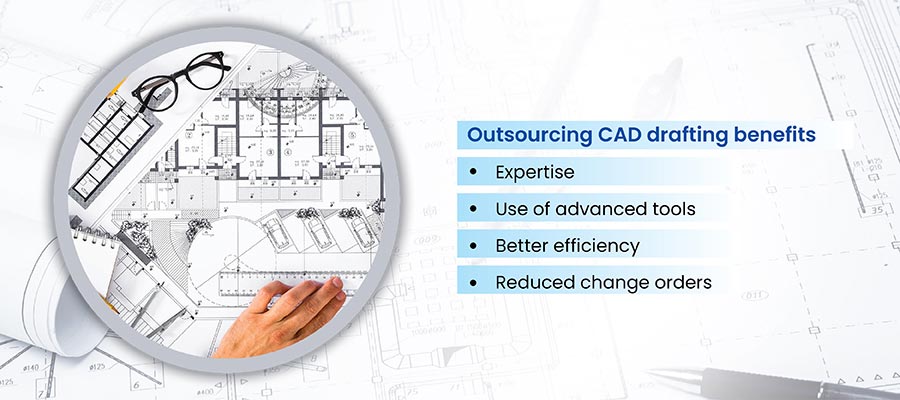
There are many advantages associated with deciding to outsource 2D drafting. You may be able to save CAD drafting costs through eliminating the cost of hiring, training and employing an internal workforce. Besides the financial aspects of outsourced engineering design, there are additional benefits that may have an impact on your bottom line.

- CAD drafting outsourcing provides you with access to CAD expertise. With a pool of talent and experienced professionals who remain current with the most recent developments in their field, you are ensured of high-quality deliverables.
- The use of advanced CAD technology does not require capital expenditures. You receive the advantage of having the most recent technology available at no expense.
- With faster turnaround time, outsourcing enables your internal team to spend its time on tasks that are directly involved with the operation of your business.
- When a design is accurate, less time and money is spent on making last minute changes.
FAQs on CAD drafting outsourcing
CAD drafting outsourcing is the process of delegating drafting and design documentation tasks such as 2D drawings, 3D models and other technical documentations to an expert team that specializes in providing CAD drafting services. Outsourcing CAD drafting needs reduces project costs, give you access to specialized skills and improves turnaround times without the expense of training and maintaining an in-house drafting team.
To find trusted solutions for CAD file cleanup, first look for service providers with proven experience in handling complex CAD data, strong client testimonials as well as expertise in industry standard software. Ask for sample work, ensure the partner follows strict quality control processes, and ensure data confidentiality while delivering accurate and organized CAD files.
The main difference is that 2D drafting involves creating flat technical drawings that represent dimensions and layouts, typically used for construction and manufacturing plans. 3D CAD modeling on the other hand creates a three-dimensional representation of objects, allowing for better visualization, simulation, and design validation before actual production.
The typical turnaround time depends on project complexity, scope as well as the volume. Simple drafting tasks may take a few hours to a couple of days, while larger, more detailed projects can take several days or weeks. Outsourcing partners may provide expedited delivery options for urgent requirements.
Conclusion
Outsourcing CAD drafting is an essential business strategy which has many advantages, such as cost reductions and acquiring expert services. The check list we have developed will enable you to select the most suitable outsourcing company to work with on your sheet metal CAD drawings.
Following our check list will help you to make an informed decision regarding your business’ future and to ensure high levels of both efficiency and quality.
High-accuracy CAD drafting to support faster production cycles.
Contact us →
Authored by:

Usha B. Trivedi is an engineer and she contributes in-depth articles for mechanical and industrial equipment designs, furniture designs and fabrication sector. Her contributions are primarily focused on enabling engineering professionals, furniture manufacturers and fabricators to optimize design outcomes through CAD and CAE tools.
 Concept to Detail Design
 Automated Door Design Customization

 Mar 17th, 2026